
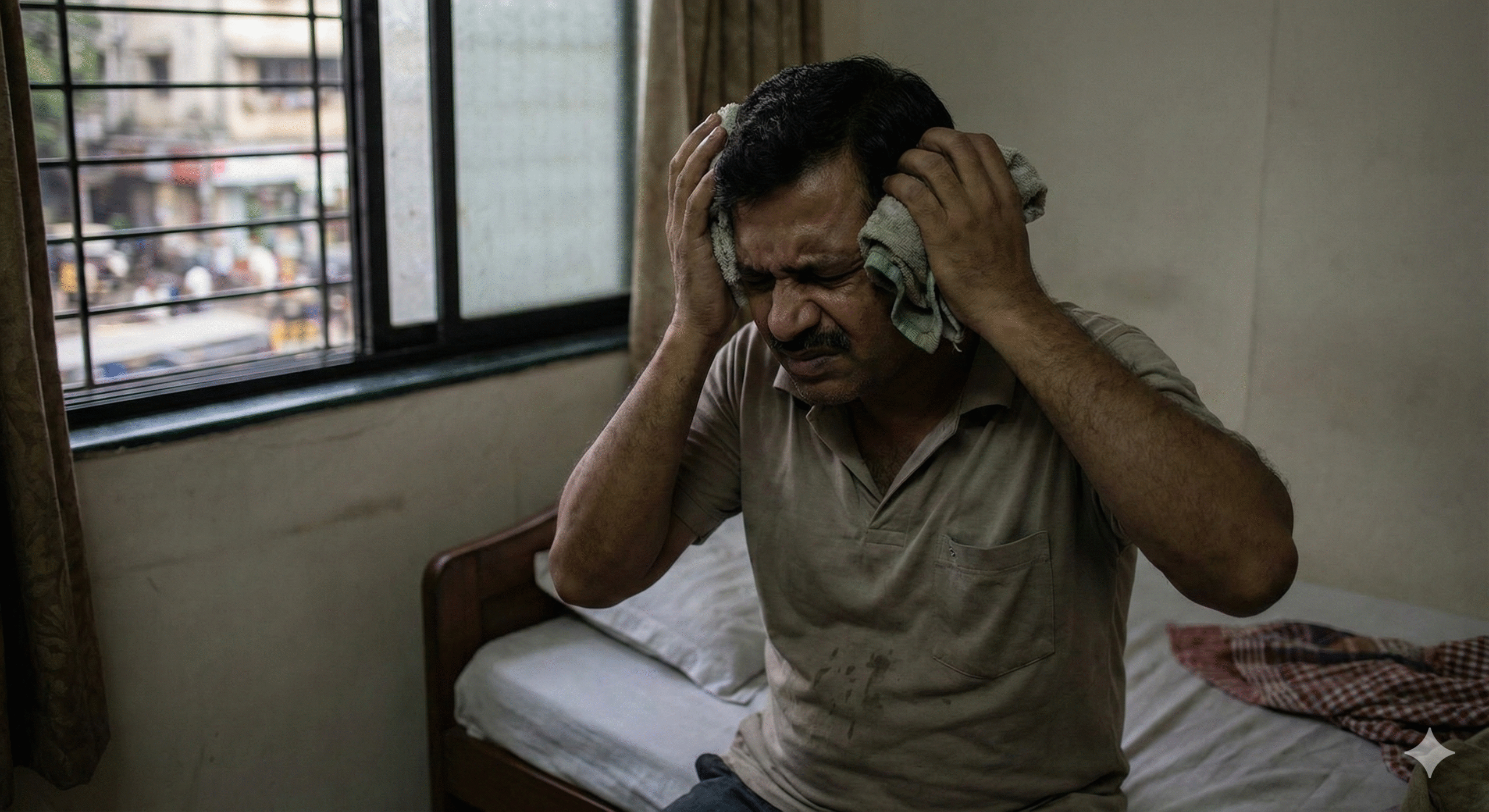

Migraines are not just “really bad headaches.” They are a neurological condition often characterised by throbbing pain, light and sound sensitivity, nausea, and sometimes one-sided head pain. For many people, these episodes are triggered by stress, irregular sleep, dehydration, hormone fluctuations, sensory overload and dietary factors. According to Ayurvedic and conventional sources, lifestyle, diet and head/nerve circulation play a key role.

From an Ayurvedic viewpoint, migraines often stem from an imbalance in the doshas (especially Vata) and impaired circulation of vital energy (prāna) in the region of the head and senses.
Why an Integrative Approach Works
Rather than simply treating the pain when it happens, the integrative approach aims to:
- Reduce the frequency of migraine episodes
- Lessen the severity when they occur
- Improve general head/nerve health, stress resilience and circulation
- Support prevention through lifestyle and Ayurvedic support
Research suggests that practices like yoga, meditation, consistent sleep, and herbal support help reduce migraine frequency and intensity.
Practical Lifestyle & Diet Tips
Here are actionable steps your audience can follow:
- Maintain regular sleep patterns – go to bed and wake up at the same time. Disrupted sleep is a common trigger.
- Manage stress – incorporate 10–15 minutes of calming practices each day (e.g., breathing exercises, gentle yoga).
- Stay hydrated – dehydration can trigger head pain.
- Eat at regular intervals, avoid long gaps between meals (which may trigger migraines).
- Identify and avoid food triggers – such as aged cheese, processed meats, caffeine withdrawal, excessive sugar dips
Ayurvedic Therapeutic Supports

Here are some well-founded Ayurvedic supports for migraine:
- Head & scalp massage (Shiro Abhyanga) with herbal oils: This calms the nervous system, improves circulation in the head region.
- Nasya therapy (applying medicated oil in nostrils) when sinus or nasal congestion links with migraines.Herbs such as Brahmi, Jatamansi, Turmeric, Ginger – for neuro-tonic and anti-inflammatory effects.
- Regular gentle yoga & pranayama: improves circulation, relieves tension in head/neck muscles, balances doshas.
As part of the integrative offering from Jeevanam, the Kesajeevan Herbal Relief Oil is positioned as:
- A 100% herbal hair/oil formula crafted in Kerala, designed to support both head discomfort/migraine relief and hair/scalp health. Jeevanam
A dual-benefit product: While many hair oils only focus on hair, this one addresses the head region (scalp + nerve/ circulation around the head) for comfort, cooling effect, and overall head-wellness.
Usage suggestion: Applied externally to scalp/head area; massage gently, let the herbal formula absorb. Regular use (90 days mentioned) yields better results.
How to incorporate it in a migraine-relief routine
- At the onset of head tension/migraine symptoms, perform a gentle 5-10 minute scalp & temple massage using Kesajeevan oil
Follow with a short calming rest in dim light or perform a guided 3-5 minute breathing exercise (e.g., alternate nostril breathing).
Combine with broader lifestyle supports: hydration, gentle yoga, regular sleep, diet adjustments.\
. When to Seek Professional Support
While all of the above supports create a robust self-care routine, it’s important to seek professional medical evaluation if:
- You experience new onset, very intense migraine with symptoms like vision changes, numbness, weakness, or confusion.
- Your migraine pattern changes significantly or becomes more frequent.
- Lifestyle modifications and supportive Ayurveda do not reduce frequency/intensity over a few months.
Modern research advises caution and professional supervision when mixing advanced herbal/therapies.
Key Take-aways
- Migraines require a multi-dimensional approach: lifestyle, stress management, diet, circulation, nervous system balance.
- Ayurveda offers valuable supports – including head-oil massage, nasya, herbs and mindful living practices.
- The Kesajeevan Herbal Relief Oil from Jeevanam offers a tangible anchor for the head/nerve-circulation dimension and can be integrated into daily/weekly self-care.
- Consistency is key: regular use + holistic supports = real shift in frequency/severity of migraines over time.
- Encourage readers to monitor their triggers, maintain a gentle routine, and use the oil as part of that broader rhythm of self-care.